


What surfaces need pressure washing on a commercial property in London?
Pressure washing is one of the most effective tools in commercial exterior cleaning, but the results depend on using the right method for the right surface at the right time. This guide covers which external surfaces benefit most from pressure washing in London, how to schedule it around building operations, and what building managers should know about surface protection and water management.
External surfaces on commercial buildings in London accumulate soiling at a rate that most standard cleaning programmes do not adequately address. Car park surfaces darken with tyre deposits and oil residue. Paved entrance areas develop algae and moss that become slip hazards. Cladding panels accumulate atmospheric pollution and biological growth. External walls develop staining from weathering, run-off and urban particulate matter.
For commercial properties in London,pressure washing is one of the most effective ways to address this type of soiling, but it is not a single, uniform method applied to all surfaces the same way.
The right pressure, the right temperature, the right cleaning agent and the right timing all affect whether the result is a clean surface or a damaged one. This guide covers the surfaces that benefit most from commercial exterior cleaning, how pressure washing should be scheduled and specified, and what building managers should understand about surface protection and water management before commissioning the work.
Why external surfaces deteriorate faster in London
London's urban environment accelerates the soiling of external commercial surfaces in ways that less polluted locations do not experience at the same rate.
Atmospheric pollution and carbon deposits
Vehicle traffic, construction activity and general urban particulate matter settle continuously on external surfaces. Over time this produces a darkening effect on paving, walls and cladding that worsens progressively and becomes increasingly difficult to remove the longer it is left.
Carbon deposits bond to porous surfaces such as concrete and stone, and to textured cladding finishes, requiring more intensive treatment to remove once established than when addressed as part of a regular commercial exterior cleaning programme.
Biological growth
Algae, moss and lichen colonise external surfaces wherever moisture and shelter combine. North-facing elevations, recessed areas, shaded paving and surfaces with poor drainage are particularly prone.
Biological growth on paving and external steps is a direct slip hazard and a health and safety concern for building users. On cladding and external walls, biological growth retains moisture against the surface and accelerates deterioration of the substrate over time.
Run-off staining and surface soiling
Rainwater run-off carries soiling from upper surfaces to lower ones, creating staining patterns on external walls below window sills, coping stones and horizontal ledges. In car parks and service areas, vehicle fluids, tyre deposits and general operational soiling accumulate on hard surfaces regardless of how frequently they are swept.
Which surfaces benefit most from pressure washing in London
Car parks and hardstanding areas
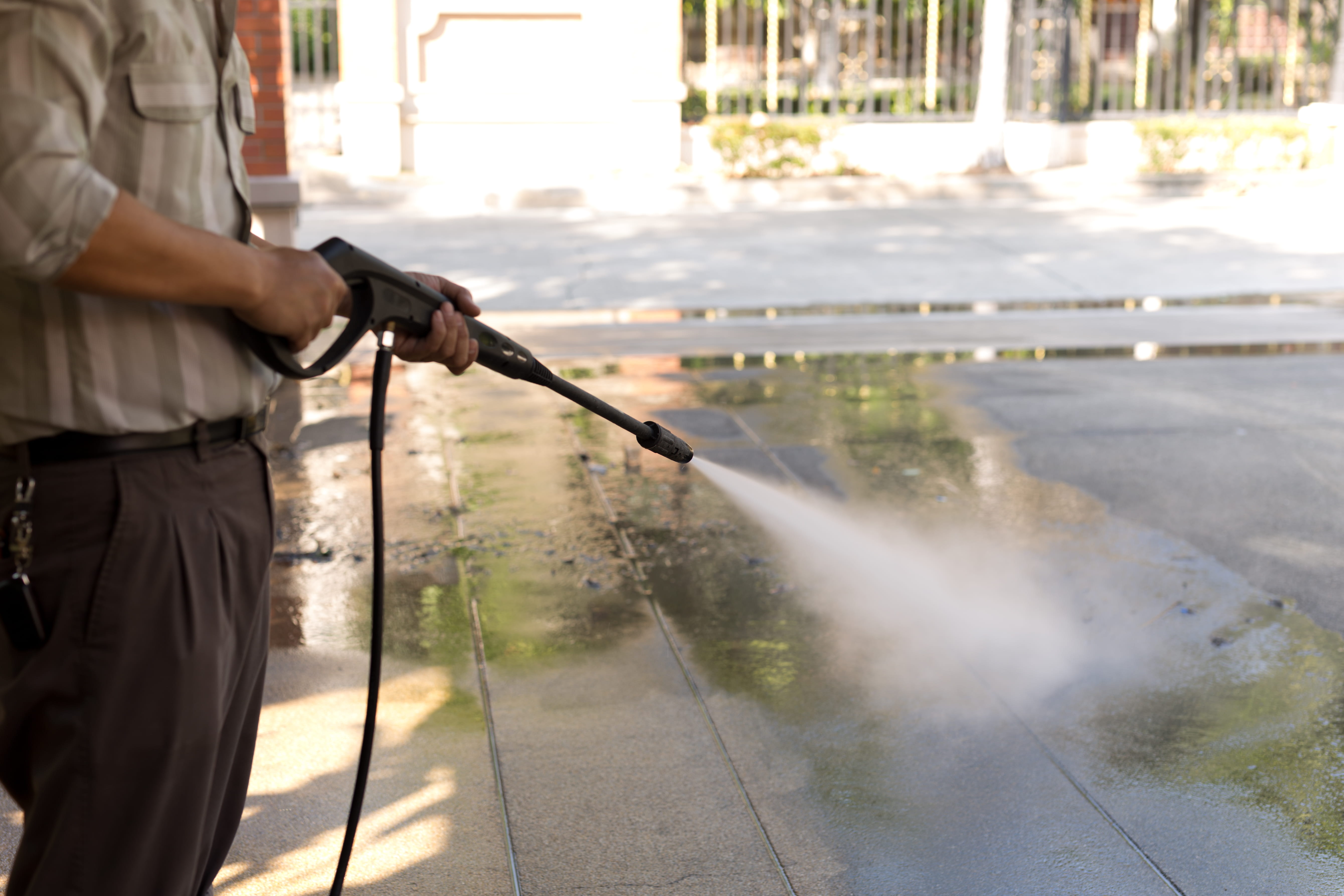
Car parks are among the highest-impact applications for commercial pressure washing in London. The combination of vehicle traffic, oil and fluid deposits, tyre rubber transfer and general soiling produces surfaces that deteriorate visually and physically without regular cleaning.
Pressure washing removes the accumulated soiling that sweeping alone cannot address, restores the appearance of the surface, and clears drainage channels and gulleys that become blocked with debris over time.
For multi-storey car parks, pressure washing also addresses the salt and grit deposits from winter road maintenance that are tracked in on vehicles and accelerate the corrosion of concrete and steel elements if left on surfaces over time. Scheduling car park pressure washing outside peak usage hours minimises disruption to building users and allows surfaces to dry before traffic returns.
External paving and entrance areas
Paved entrance areas, pedestrian routes and external steps are high-visibility surfaces that form part of the first impression a commercial building makes on visitors and tenants. Algae and moss growth on paving becomes a slip hazard quickly in wet conditions and is a health and safety concern that building managers have a duty to address.
Pressure washing of external paving removes biological growth, atmospheric soiling and general staining, restoring the surface to a safe and presentable condition. Post-cleaning application of a biocidal treatment extends the period between cleaning visits and reduces the slip risk from biological growth between scheduled cleans.
External walls and rendered surfaces
External walls accumulate atmospheric soiling, biological growth and run-off staining that affects the building's overall presentation significantly over time. Building facade cleaning in London using controlled pressure washing removes surface deposits from rendered, painted and masonry wall surfaces without the cost and disruption of repainting or resurfacing.
The pressure and method used for external wall cleaning needs to be matched to the surface. Rendered surfaces, particularly older or thinner renders, are more susceptible to damage from high pressure than brick or concrete.
Painted surfaces require lower pressure to avoid lifting the paint film. A test area assessment before full application confirms the appropriate method for the specific surface.
Cladding panels and facade elements
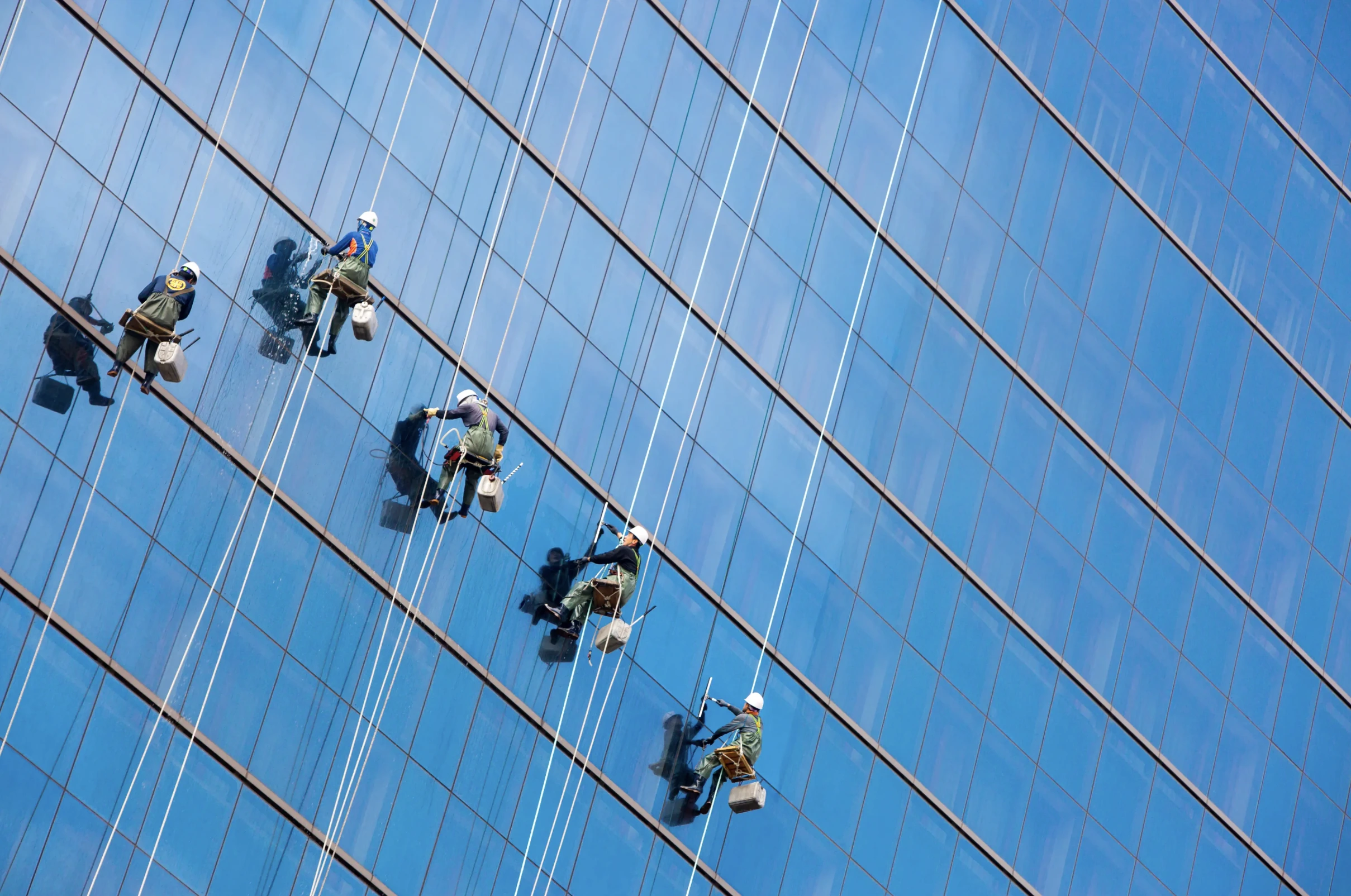
Cladding on commercial buildings accumulates soiling at a similar rate to glazing but is typically cleaned far less frequently. Commercial pressure washing of cladding panels removes atmospheric deposits, biological growth and surface staining, and is most cost-effectively carried out in conjunction with commercial cladding cleaning and window cleaning as part of a coordinated exterior maintenance programme.
For sensitive cladding materials, soft washing using lower pressure combined with appropriate cleaning agents is the preferred method over high-pressure washing.
Stone and masonry surfaces
Stone paving, stone-clad walls and masonry elements respond well to controlled pressure washing in London for general atmospheric soiling and biological growth. The method needs to be appropriate for the stone type. Softer limestones and sandstones require lower pressure and gentler treatment than granite or hard engineering brick.
For heavily soiled stone, pressure washing is often combined with specialist chemical cleaning agents that break down the soiling before the wash, reducing the pressure needed and lowering the risk of surface damage.
Our guide to stone cleaning and facade maintenance covers method selection for commercial stone surfaces in more detail.
Surface reference: recommended approach and frequency
Surface | Method | Best season | Recommended frequency |
Car park and hardstanding | High-pressure wash | Spring and autumn | Every 6 to 12 months |
External paving and steps | Pressure wash + biocidal treatment | Spring and autumn | Every 6 to 12 months |
Rendered external walls | Low to medium pressure | Spring | Every 2 to 3 years |
Brick and masonry | Controlled pressure wash | Spring or autumn | Every 2 to 3 years |
Cladding panels | Soft wash or low pressure | Spring | Every 12 to 24 months |
Stone surfaces | Low pressure + chemical pre-treatment | Spring | Every 2 to 3 years |
External steps and ramps | Pressure wash + biocidal treatment | Autumn | Every 6 months minimum |
Scheduling commercial exterior cleaning in London
When to schedule pressure washing
The most practical window for commercial pressure washing in London is late spring or early autumn. Late spring cleaning addresses the biological growth that has established through the damp winter months before it becomes more deeply embedded through summer. Autumn cleaning removes the soiling accumulated through summer and prepares surfaces for the wetter months ahead.
For high-footfall surfaces such as entrance paving and external steps where slip risk is a safety concern, more frequent cleaning may be needed regardless of season. A risk assessment of the specific surfaces involved should determine the appropriate frequency rather than a generic annual schedule applied uniformly across all surfaces.
Scheduling around building operations
Commercial exterior cleaning in London needs to be scheduled around the operational requirements of the building and its occupants. Pressure washing generates noise, wet surfaces and in some cases overspray that affects adjacent areas. Practical scheduling considerations include:
Avoiding peak pedestrian hours on entrance areas and external steps
Scheduling car park cleaning outside normal operating hours
Allowing adequate drying time before surfaces are returned to use
Communicating planned cleaning to building occupants and tenants in advance
Confirming drainage arrangements for wash water before works begin
Water management and drainage
Pressure washing generates significant volumes of water that need to be managed appropriately. On commercial sites, wash water from car parks and service areas may carry oils, fuel residues and other contaminants that cannot be allowed to enter surface water drainage directly.
A responsible commercial pressure washing contractor will confirm the drainage arrangements on site and use appropriate containment or treatment measures where contaminant run-off is a concern.
Allowing contaminated wash water to enter surface water drains is an environmental offence. Building managers commissioning external cleaning should confirm that the contractor has considered and addressed this before works begin.
What to look for in a commercial pressure washing contractor in London
When commissioning pressure washing in London for a managed commercial property, the following are worth confirming before the work begins:
Does the contractor carry out a site assessment and surface inspection before specifying the method and pressure settings?
Can they demonstrate experience with the specific surface types on the building?
Do they hold appropriate public liability insurance for commercial exterior cleaning work?
How do they manage wash water and drainage on site?
Can they provide a method statement for the works?
A contractor who can answer these clearly and has assessed the specific building is better placed to deliver a good result without surface damage than one offering a standard rate without site-specific assessment.
Frequently asked questions
How often should commercial exterior cleaning be carried out in London?
For most commercial buildings, annual pressure washing of external surfaces is a practical starting point. High-footfall paving, entrance areas and car parks may benefit from more frequent cleaning depending on the level of soiling and the slip risk from biological growth. The surface reference table above gives a more specific guide by surface type.
Can pressure washing damage external surfaces?
Yes, if the wrong pressure or method is used for the surface type. High pressure on soft renders, textured cladding or older stonework can cause surface erosion, lift paint films or force water into joints and cavities. A test area assessment before full application and method selection matched to the specific surface avoids this. Soft washing is the preferred approach for sensitive surfaces.
What is the difference between pressure washing and soft washing?
Pressure washing uses high-pressure water to remove soiling mechanically from the surface. Soft washing uses lower pressure combined with cleaning agents that break down soiling chemically before rinsing, reducing the mechanical force needed. Soft washing is preferred for sensitive surfaces, biological growth on paving, and cladding materials where high pressure would risk surface damage.
Does commercial pressure washing in London require permits or drainage arrangements?
Work on public highways may require prior arrangement with the local authority. For most commercial sites on private land, no permit is needed for the cleaning itself, but drainage arrangements for wash water should be confirmed in advance, particularly where wash water may carry contaminants from car parks or service areas.
How long does commercial exterior cleaning take for a typical commercial building?
Duration depends on the surface area involved, the access method required for upper-level surfaces, the extent of soiling and the cleaning method used. Ground-level paved areas and car parks can often be completed within a day. Buildings requiring access equipment for upper-level facade cleaning will take longer. A site assessment before the programme begins gives a more accurate estimate.
Can pressure washing be combined with other exterior maintenance works?
Yes, and this is generally the most cost-effective approach. Pressure washing of paved areas, commercial cladding cleaning and commercial window cleaning can often be coordinated within the same programme, reducing the total number of contractor visits needed and the overall cost of keeping the building's exterior maintained to a consistent standard.
Getting the right result from commercial exterior cleaning in London
External surfaces on commercial buildings in London accumulate soiling, biological growth and surface staining continuously. Pressure washing in London as part of a planned commercial exterior cleaning programme addresses these issues more efficiently and at lower long-term cost than reactive cleaning once deterioration has become a visible problem.
The surface, the method and the timing all matter: a programme built around the specific surfaces on the building and their individual requirements delivers better and longer-lasting results than a generic clean applied uniformly.
Classic London provides pressure washing services for commercial properties across London and the South East, covering car parks, paving, external walls, cladding and stone surfaces.
To discuss exterior cleaning requirements for your building or to plan a maintenance programme, speak with the Classic London team.