


MEWP Hire for Building Maintenance Tasks: A Guide for Facilities Managers
Choosing the right access platform for a building maintenance task is not simply a question of height. The type of work, the building's access constraints, the surface conditions and the programme timeline all affect which MEWP is appropriate. This guide covers the most common building maintenance applications for access platforms and how to match the right machine to each task.
For facilities managers and property teams commissioning exterior maintenance in London, MEWP hire is a routine part of the programme. Whether the task is window cleaning, facade inspection, external painting or roofline maintenance, access platform hire in London gives operatives a safe, stable working position at height without the setup time and cost of scaffold. The question is not whether to use a platform, but which one, and how to match it to the specific demands of the building and the task.
This guide covers the most common building maintenance applications for MEWP hire in London, what each task requires from an access platform, and what to confirm before the machine arrives on site. If you need a broader overview of MEWP types and how they differ mechanically, our guide to choosing the right MEWP type covers that in detail. For cost and budgeting guidance, our MEWP hire costs guide covers rates and what drives them.
Why Building Maintenance Applications Have Specific Access Requirements
General access platform hire and access platform hire in London for building maintenance are not quite the same thing. A construction site hiring a telescopic boom lift for structural work has different priorities from a facilities manager commissioning MEWP hire for a window cleaning programme on an occupied commercial building in central London.
Building maintenance applications typically involve:
Working on or close to an occupied building rather than an open construction site
Coordinating access around building occupants, pedestrians and neighbouring properties
Matching the platform to a specific building element such as a facade, roofline or external fixture
Completing the work within a programme that fits around the building's operational schedule
Returning the building to normal use promptly once the task is complete
These factors affect which machine is most appropriate, how the access platform hire in London is organised, and what the contractor needs to confirm before the platform arrives on site.
Common Building Maintenance Tasks and the Right MEWP for Each
External Window Cleaning
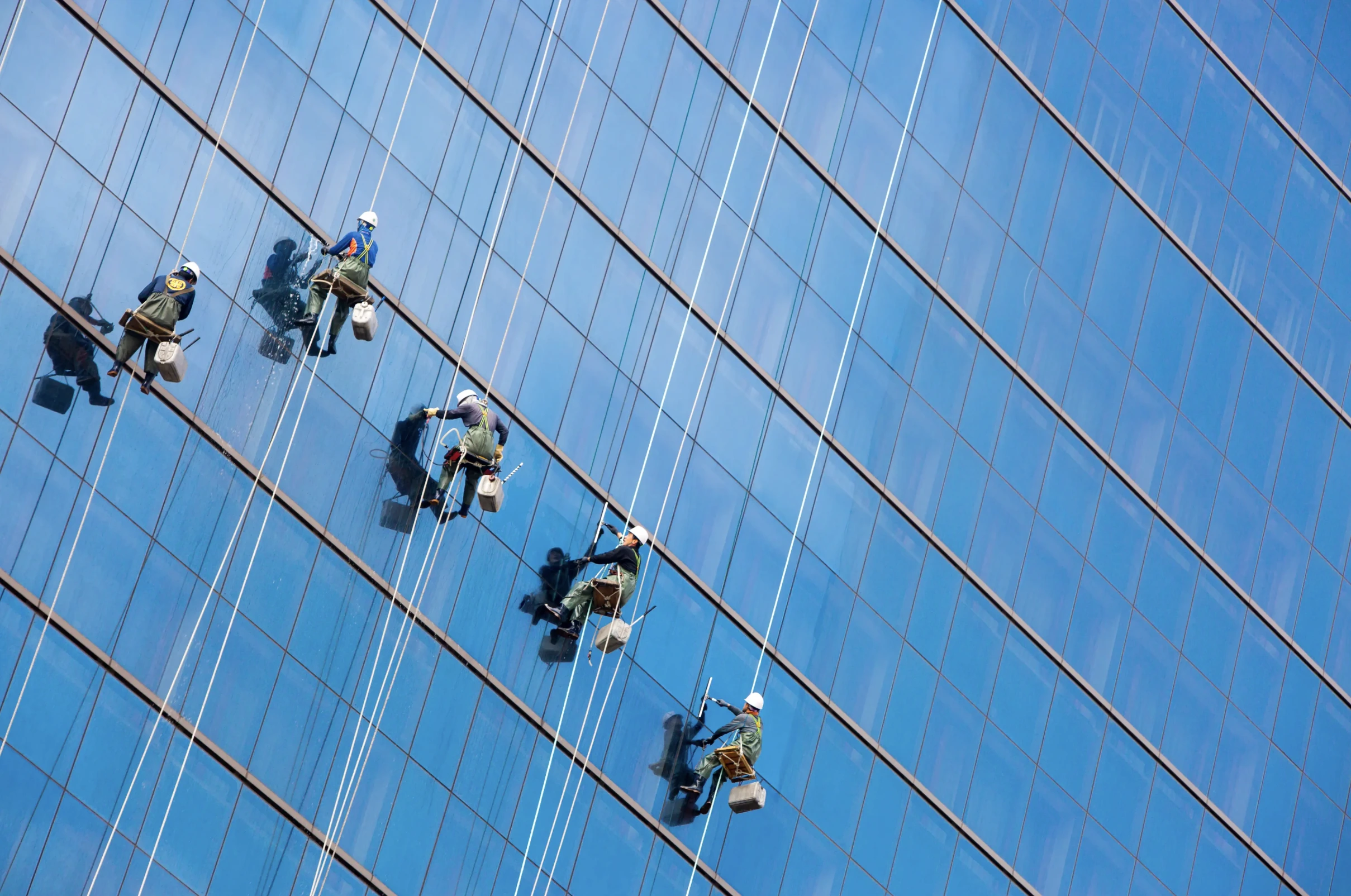
Window cleaning on mid-rise commercial buildings is one of the most common applications for MEWP hire in London. Water-fed pole systems handle low-rise work from the ground, but buildings above approximately five or six storeys require an elevated platform or rope access to reach upper floors effectively.
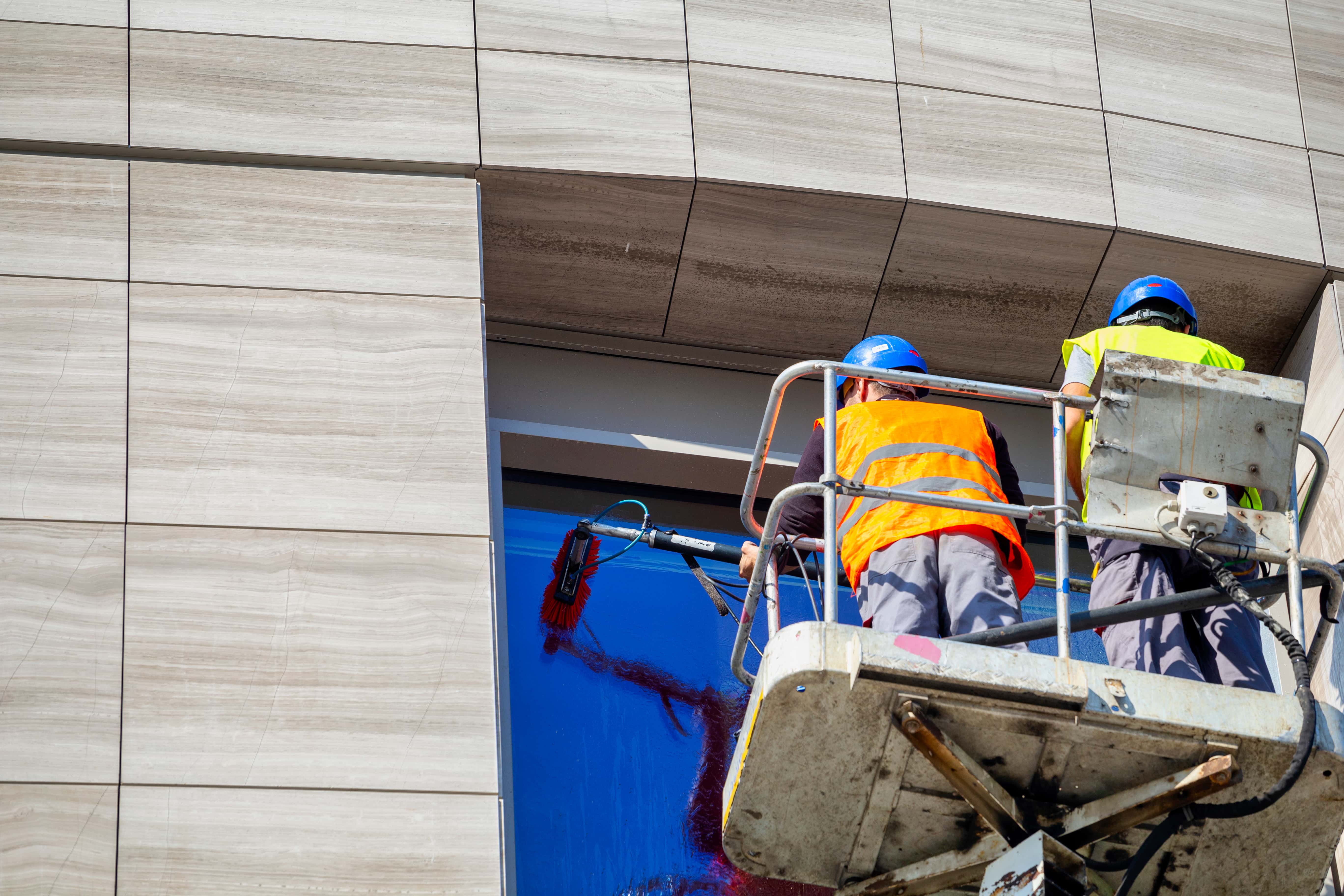
For buildings where ground conditions are suitable and sufficient space exists around the perimeter, boom lift hire in London provides the outreach needed to reach upper-floor glazing without repositioning constantly beneath each window. For buildings with more restricted perimeter access, spider lift hire in London is a practical alternative: the compact footprint allows the machine to be positioned closer to the building on surfaces that would not support a larger platform.
For very tall buildings where no ground-based platform can reach the upper facade, abseiling and high-level access is the appropriate method rather than access platform hire. Classic London provides both, so the access method can be matched to the building rather than defaulted to one approach.
Facade and Cladding Inspection
Facade and cladding inspection requires operatives to work methodically across the building's exterior, examining panel joints, fixings, sealant lines and glazing seals at close range. Access platform hire in London for this type of work benefits from a platform that provides good outreach and stable, unhurried access rather than one optimised purely for speed.
Boom lift hire in London is well suited to facade inspection because the articulated arm can position the platform close to different sections of the facade without requiring the machine to be repositioned on the ground for every bay. For buildings with restricted ground access, spider lift hire in London offers a practical alternative where surface conditions make a conventional boom lift difficult to deploy safely.
Facade inspection is also frequently combined with other maintenance works in the same programme. A boom lift hired for a cladding inspection can often carry out minor sealant repairs, fixing replacements or cleaning in the same visit, reducing the total number of access mobilisations and the overall programme cost.
External Painting and Decorating
External painting on commercial buildings requires access that is stable, spacious enough for operatives and their materials, and capable of being repositioned efficiently as work progresses across the facade. Commercial decorating at height is one of the more demanding building maintenance applications for MEWP hire in London because the work is time-intensive and the platform needs to hold operatives, paint, tools and equipment safely at the same time.
Scissor lifts are well suited to painting work where the facade is vertical and the machine can be positioned directly below each section. Their wide, stable deck provides good working space for operatives and materials. For facades with irregular geometry, projections or recessed sections, boom lift hire in London provides the flexibility to position the platform at different angles without constant ground repositioning.
Load capacity is an important consideration for painting programmes. The weight of operatives, paint, spray equipment and tools on the platform simultaneously needs to stay within the machine's rated load capacity. This should be confirmed as part of the pre-hire assessment rather than assumed on the day.
Gutter Clearance and Roofline Maintenance
Gutter clearance and maintenance of roofline elements such as flashings, copings, downpipes and roof-edge fixings requires access to the building's upper perimeter. Boom lift hire in London is the standard choice for this type of work where ground access allows, providing reach to the roofline without the need for scaffold or roof access.
For buildings where the roofline is complex, where there are obstructions between the ground position and the work area, or where ground conditions limit where the machine can be set up, an articulated boom lift's ability to work around obstacles makes it more practical than a telescopic model. Spider lift hire in London is also used for roofline work on buildings where conventional boom lifts cannot be deployed due to access or ground bearing constraints.
Lighting and External Fixture Maintenance
Lighting column maintenance, external signage, CCTV installations and other fixtures attached to commercial building exteriors require periodic maintenance at height for relatively short periods. Cherry picker hire in London is commonly used for this type of task because vehicle-mounted platforms can be positioned quickly from the roadside, reach significant heights, and move along a building frontage efficiently without the setup time of a self-propelled machine.
For tasks on private land away from the public highway, a self-propelled scissor lift or compact boom lift is usually more practical than a vehicle-mounted platform. The choice depends on whether the work runs along a street frontage, where roadside MEWP hire in London makes sense, or on private land, where a self-propelled machine is easier to manoeuvre and position precisely.
Post-Construction Snagging and Cleaning
At the end of a construction or refurbishment project, access platform hire in London is used for snagging inspections, post-construction cleaning of upper-floor facades, and reinstatement of external fixtures and finishes. This is typically one of the final stages before building handover, which means the platform needs to be available on a programme that fits the construction team's handover schedule.
For post-construction work, the ground conditions around the building are often better than during the main construction phase, which opens up more options for platform choice. A telescopic boom lift provides good coverage for tall buildings on open sites. For more confined urban sites, an articulated boom or spider lift hire in London handles access constraints more effectively.
Key Considerations When Commissioning MEWP Hire in London for Building Maintenance
Confirm Ground Conditions in Advance
Building maintenance work in London frequently involves ground surfaces that have constraints not present on open construction sites. Pavements over basement structures, service trenches, decorative paving and areas with underground utilities all affect the load-bearing capacity of the surface and therefore which machines can be safely deployed. This should be assessed before the access platform hire is confirmed, not discovered on the day the machine arrives.
Account for Pedestrian and Traffic Management
Work on or around occupied commercial buildings in London almost always involves pedestrian management around the machine's working area. Exclusion zones, temporary barriers and in some cases traffic management arrangements may be needed. These have cost and programme implications that should be factored into the project budget from the outset.
Match the Programme to the Building's Schedule
Building maintenance work that disrupts occupants creates management problems that outlast the maintenance programme itself. Coordinating MEWP hire in London around the building's operational schedule, whether that means avoiding early morning starts near residential occupiers or scheduling facade work outside peak business hours, is part of planning a programme that is delivered without unnecessary friction.
Use Operated Hire for Building Maintenance
For most building maintenance applications, operated hire, where a qualified operative is provided with the machine, is more practical than dry hire. Building maintenance tasks require operatives who understand the specific demands of working close to an occupied building and who can adapt to the constraints of the site on the day.
Quick Reference: MEWP Type by Maintenance Task
Task | Recommended Platform | Key Consideration |
Window cleaning, mid-rise | Boom lift or spider lift | Outreach, ground access |
Facade and cladding inspection | Articulated boom lift | Obstacle clearance, stability |
External painting | Scissor lift or boom lift | Load capacity, repositioning |
Gutter and roofline maintenance | Boom lift | Height, outreach to roofline |
Lighting and fixture maintenance | Cherry picker or scissor lift | Roadside vs private land |
Post-construction snagging | Telescopic or articulated boom | Site conditions, height |
Frequently Asked Questions
What type of MEWP is most commonly used for building maintenance in London? Boom lifts and scissor lifts are the most commonly hired platforms for commercial building maintenance. Boom lift hire in London is used for external facade work, window cleaning and roofline maintenance where outreach is needed. Scissor lifts are used for internal maintenance and lower-level external work. Spider lift hire in London is specified where access is restricted or ground conditions limit conventional platform deployment.
Can access platforms be used on London streets for building maintenance? Yes, vehicle-mounted and trailer-mounted platforms can be used from the public highway for building maintenance work, subject to appropriate permits. Cherry picker hire in London from the roadside is a common approach for lighting, signage and facade work along commercial streets. Permit requirements vary by borough and should be confirmed in advance.
How far in advance should MEWP hire in London be booked for a maintenance programme? For standard platforms such as scissor lifts and boom lifts, one to two weeks is generally sufficient for planned maintenance work. For specialist machines or programmes in central London where delivery logistics require more planning, earlier booking gives more flexibility. For recurring maintenance programmes, a longer-term arrangement with a regular contractor is more cost-effective than repeated short-notice bookings.
Is operated access platform hire always more expensive than dry hire? The operated hire rate is higher than dry hire for the same machine. However, for building maintenance applications where the hiring organisation does not have its own IPAF-qualified operatives, the total cost of dry hire plus a separately sourced operator is often comparable to or higher than a straightforward operated hire arrangement.
What compliance documentation should a MEWP hire contractor in London provide? The contractor should provide current LOLER examination certificates for the machine, evidence of IPAF certification for operatives, public liability and employers' liability insurance certificates, and a method statement and risk assessment specific to the site and task. These should be requested and reviewed before work begins.
The Right Platform for the Right Task
Building maintenance in London covers a wide range of tasks, and the access platform that suits one job may not be the right choice for the next. Matching the machine to the specific requirements of the task, the building and the site conditions is what makes the difference between a programme that runs efficiently and one that encounters problems on the day.
Classic London's MEWP hire services cover the full range of building maintenance applications across London and the South East, with operated hire available for facilities teams who need a qualified operative provided with the machine. To discuss access requirements for a planned maintenance programme or a specific building task, speak with the Classic London team.