


How is fire damage cleaned and restored in a commercial building?
Fire damage in a commercial building extends well beyond the area where the fire started. Smoke, soot and water damage spread rapidly and require specialist cleaning before any restoration or reinstatement work can begin. This guide covers the fire damage cleaning and restoration process for commercial buildings in London, what each stage involves, and what property managers need to coordinate between the insurance process and the reinstatement of the building.
Fire damage restoration in London for commercial buildings is rarely a straightforward process. The damage from a fire extends well beyond the area where it started: smoke travels through ventilation systems, open doorways and ceiling voids within minutes, depositing soot on surfaces far from the source.
Water used to extinguish the fire saturates floors, walls and ceilings across multiple levels. Combustion residues contaminate surfaces that appear undamaged. By the time a fire is out, the scope of the cleaning and restoration work required is almost always larger than the visible damage suggests.
For property managers and facilities teams, understanding what fire damage cleaning and restoration actually involves, how the process is sequenced, and what needs to be coordinated between the insurance process and the physical works is what allows the recovery to be managed efficiently rather than reactively.
If you need guidance on the immediate steps to take in the hours after a fire, our post on what to do immediately after a commercial building fire covers that separately. This guide focuses on the cleaning and restoration process itself: what each stage involves, how long it takes, and what determines whether a building is properly restored or left with problems that emerge months later.
Why fire damage cleaning is more involved than it first appears
The pressure after a fire to clean up and return the building to use quickly is understandable. But commercial post-fire cleaning work that is rushed, incorrectly sequenced or carried out without the right equipment creates problems that are expensive to resolve retrospectively.
Smoke and soot penetration
Smoke does not stay in the room where the fire occurred. It moves through the building rapidly, depositing soot on walls, ceilings and surfaces in areas that may show no other sign of damage.
Soot particles are extremely fine and penetrate porous surfaces including plaster, timber and unfinished concrete. On non-porous surfaces, soot bonds quickly and becomes progressively harder to remove the longer it is left.
The chemical composition of soot varies depending on what is burned. Soot from burning plastics and synthetic materials contains acidic compounds that corrode metal surfaces, etch glass and discolour finishes within hours of deposition. Identifying what burned and what type of soot is present affects which cleaning method is appropriate and how urgently smoke damage cleaning needs to begin.
Smoke odour
Smoke odour is one of the most persistent aspects of fire damage restoration for London commercial buildings and one of the most frequently underestimated. Odour compounds from smoke penetrate building fabric, HVAC ductwork and finishes, and do not dissipate naturally over time.
A building that has been structurally repaired and repainted but not properly deodorised will smell of smoke for months, creating an ongoing problem for occupants that is difficult to resolve retrospectively.
Effective smoke odour elimination requires treatment of the HVAC system, where smoke compounds have been distributed through the ductwork, as well as surface treatment of walls, ceilings and floors. In some cases, specialist thermal fogging or ozone treatment is needed to reach odour compounds that have penetrated deeply into building fabric.
Water damage from firefighting
The water used to extinguish the fire causes its own category of damage that compounds quickly if not addressed promptly. Structural elements absorb water, flooring delaminates and mould establishes within 24 to 48 hours in wet conditions.
For property managers coordinating commercial post-fire cleaning work, water damage often requires more urgent attention than the fire damage itself because the secondary damage it causes is time-dependent.
The fire damage cleaning and restoration process
Assessment and scope confirmation
Before any cleaning or restoration work begins, a thorough assessment of the full extent of damage across all four categories, fire, smoke, soot and water, establishes the scope of the programme. This assessment should cover every area of the building that smoke or water could have reached, not just the immediate area of the fire.
The assessment informs both the cleaning specification and the insurance claim. Documenting the extent and nature of the damage thoroughly before cleaning begins is essential for the claims process and provides the baseline against which the fire damage restoration is measured.
Industrial cleaning and debris removal
The first practical stage of fire damage cleaning for commercial buildings is the removal of fire-damaged material and debris, followed by industrial vacuuming of soot, ash and particulate matter from affected surfaces.
Standard cleaning equipment is not appropriate for this stage. The volume and nature of the material, including potentially hazardous combustion residues, requires industrial-grade equipment with appropriate filtration.
Classic London's industrial vacuum services cover this initial stage for commercial buildings across London, removing bulk debris and fine particulate matter before the specialist cleaning phases begin.
Smoke damage cleaning and soot removal
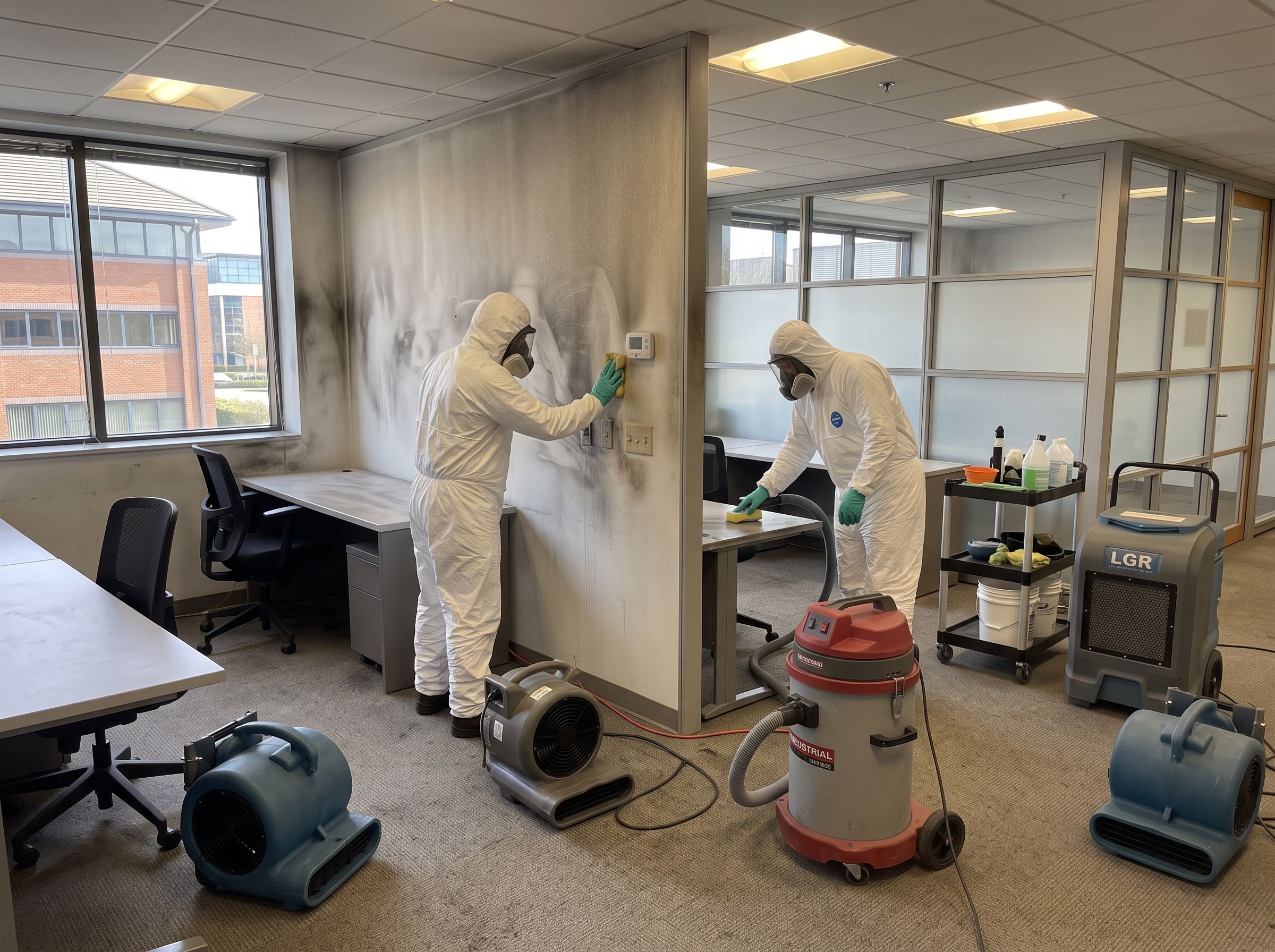
Smoke damage cleaning in London for commercial buildings requires a methodical approach that works systematically through the affected areas, addressing soot deposits on all surfaces before moving to odour treatment and structural restoration. Commercial soot removal work involves several techniques depending on the surface type and the nature of the soot:
Dry sponge cleaning removes loose soot deposits from walls and ceilings without spreading the material or pushing it further into the surface. This is typically the first step on painted and plastered surfaces before wet cleaning begins.
Chemical sponge and specialist cleaning agents break down bonded soot deposits on non-porous surfaces including glass, metal and ceramic tile. The chemistry needs to be matched to the soot type and the surface to avoid discolouration or damage.
HEPA vacuuming removes fine soot particles from surfaces, upholstery, carpets and soft furnishings. Standard vacuum equipment recirculates fine particles back into the air rather than containing them, which creates a health hazard and redeposits material on cleaned surfaces.
Specialist treatment for porous surfaces addresses soot that has penetrated plaster, timber and unfinished masonry. In some cases, surface treatment with sealant products is needed to encapsulate residual odour compounds that cannot be fully removed by cleaning alone.
Drying and dehumidification
Water from firefighting must be removed and the building fabric properly dried before any restoration or reinstatement works begin. Industrial drying equipment including dehumidifiers and air movers reduces moisture levels in the structure to acceptable levels. This process takes time and cannot be accelerated without risking mould growth, structural movement and ongoing dampness in the restored building.
Moisture monitoring throughout the drying process confirms when the building fabric has reached appropriate levels for plastering, decoration and flooring installation to begin. Starting restoration work before drying is complete is one of the most common causes of post-restoration problems including paint failure and floor movement.
Odour elimination
Smoke odour elimination is carried out once surfaces have been cleaned and the building is dry. HVAC systems that have distributed smoke throughout the building require specialist duct cleaning and treatment before the system is returned to use. Running the HVAC without addressing odour compounds in the ductwork redistributes the odour through the building regardless of how thoroughly the surfaces have been treated.
Thermal fogging and ozone treatment are used for deep odour penetration in building fabric. Both methods require the building to be vacated during treatment and adequately ventilated before reoccupation.
Fire damage repair and reinstatement
With the building cleaned, deodorised and dried, structural and cosmetic repair can begin. Classic London's fire damage repair services cover the reinstatement of building fabric, finishes and fixtures damaged by the fire.
Depending on the scale of the damage, this includes plastering, decoration, flooring replacement, joinery repair and reinstatement of fixtures and fittings.
The scope of repair should be agreed against a clear specification before works begin, both to manage cost and to ensure the restored building meets the standard required for reoccupation.
Final clean and preparation for reoccupation
Before the building is handed back for reoccupation, a thorough final clean removes dust and residue generated by the repair and restoration works. Classic London's commercial office cleaning team covers this final stage, producing a building that is clean and ready for tenants and occupants to return to.
Coordinating with insurers through the restoration process
The insurance process runs in parallel with the physical restoration works, and managing the relationship between the two effectively is one of the more demanding aspects of post-fire recovery for commercial property managers.
Agree scope before committing to works
For significant restoration programmes, insurers will typically want to agree the scope and cost of works before they are carried out. Proceeding with major cleaning or commercial fire damage restoration work in London without insurer agreement can result in disputes over what is covered. The assessment stage and its documentation are what allow this agreement to be reached before works begin.
Use contractors familiar with the insurance process
Contractors experienced in commercial post-fire cleaning work understand the documentation, reporting and sign-off requirements that insurers expect. They can provide itemised scope documents, photographic evidence and progress reports in the format the insurer and loss adjuster require, which reduces delays in claim settlement.
Loss adjuster involvement
For larger commercial fire damage claims, the insurer will typically appoint a loss adjuster to assess the damage and agree the scope of works. The loss adjuster acts on behalf of the insurer rather than the building owner. Having independent professional advice available, whether from a building surveyor or a public loss adjuster, helps property managers navigate this process from an informed position.
How long does fire damage restoration take?
Stage | Typical duration |
Assessment and documentation | 1 to 2 days |
Debris removal and industrial cleaning | 1 to 5 days depending on scale |
Drying and dehumidification | 1 to 4 weeks depending on moisture levels |
Smoke damage cleaning and soot removal | 3 to 10 days depending on extent |
Odour elimination | 1 to 3 days |
Fire damage repair and reinstatement | 2 to 12 weeks depending on scope |
Final clean and preparation | 1 to 2 days |
A contained fire affecting a single office suite may be resolved within three to four weeks. A more significant fire affecting multiple floors may take several months.
The single most important factor in reducing the overall timeline is speed of mobilisation at the early stages, particularly for water damage where secondary damage accumulates quickly.
Frequently asked questions
How quickly does smoke damage cleaning need to begin after a fire?
As quickly as possible once re-entry is permitted. Soot begins bonding to surfaces within hours of deposition and acidic compounds from synthetic materials start corroding metal and etching glass almost immediately. Water damage from firefighting begins causing mould growth within 24 to 48 hours. Mobilising emergency response services promptly significantly reduces the total scope of cleaning and restoration work required.
Can smoke-damaged contents and furnishings be restored?
Some can, depending on the material, the extent of soot penetration and how quickly cleaning begins. Hard surfaces and metal furniture can often be restored with specialist smoke damage cleaning. Porous materials that have been heavily saturated or left for an extended period before cleaning are more likely to require replacement.
What is the difference between fire damage cleaning and fire damage repair?
Fire damage cleaning removes soot, smoke residue, water and debris from the building. Fire damage repair London covers the physical reinstatement of building fabric, finishes and fixtures that have been damaged. Cleaning must be completed and the building dried before repair works begin. Starting repair or decoration before proper cleaning and drying leads to paint failure, ongoing odour and recurring damp.
Does smoke damage always require specialist treatment?
Yes. Standard commercial cleaning methods are not effective for smoke damage cleaning in London and can make the situation worse by spreading soot or pushing it further into porous surfaces. Specialist soot removal techniques, HEPA-filtered equipment and appropriate chemical treatments matched to the surface type and soot composition are required.
How does the insurance process affect the restoration timeline?
The requirement to agree scope with the insurer before committing to major works adds time to the programme, particularly if the loss adjuster's assessment differs from the initial scope proposed by the contractor. Thorough initial documentation and contractors familiar with insurer reporting requirements reduce this delay.
Can a commercial building be partially reoccupied during fire damage restoration?
In some cases. Where fire damage is contained to a specific area and other zones are structurally sound and free from smoke damage, partial reoccupation may be possible while restoration proceeds in the affected zone. This requires careful management of the interface between occupied and restoration areas, including dust control and confirmed air quality in the occupied zones.
Getting fire damage restoration right from the start
Fire damage cleaning and restoration for commercial buildings in London is a more complex and extended process than it initially appears. Smoke damage cleaning, soot removal, water extraction, odour elimination and physical reinstatement all need to be correctly sequenced and properly carried out before a building is ready for reoccupation. The insurance process needs to be managed in parallel throughout. Getting the assessment, the cleaning specification and the contractor selection right from the outset produces a better result, a smoother insurance process and a faster return to occupation than a programme driven purely by the pressure to move quickly.
Classic London provides fire damage repair services and emergency response services for commercial buildings across London and the South East, covering the full programme from initial response through to final restoration and handover. To discuss fire damage cleaning and restoration requirements for your building, speak with the Classic London team.