


What does facade cleaning involve on a commercial building?
Facade cleaning covers more ground than most property managers expect, and the right approach depends heavily on what the building is actually made of. Here is what it involves, and how often it is really needed.
Building facade cleaning, sometimes referred to as external facade cleaning, is the process of cleaning a commercial building's external walls and surfaces, including the materials, finishes and architectural features that make up its visible exterior. For a commercial building, that usually means more than one material at once: stone, brick, render, cladding and glass can all sit on the same elevation, each reacting differently to London's weather and pollution, and each needing a different cleaning method.
This matters more than it might first appear. A facade is the first thing a tenant, visitor or passer-by sees, and it is also one of the clearest external signs of how well a building is maintained more generally. A building with a clean, well-kept facade signals a well-run property. One with visible staining, streaking or biological growth raises the same question in a facilities manager's mind as it does in a tenant's: what else has been left too long.
Why commercial facades in London need more than a general exterior clean
London's environment is particularly hard on exterior surfaces. Traffic pollution and rainfall combine to produce black carbon staining on stone and render, while shaded, damp elevations are prone to algae and lichen growth that a simple rinse will not remove. Older commercial buildings, which make up a large share of London's office and retail stock, often combine several of these issues on the same facade at once.
This is why facade cleaning is treated as a distinct discipline rather than an extension of general window or exterior cleaning. The surfaces involved are more varied, the staining is often more established, and getting the method wrong on the wrong material can cause lasting damage rather than simply failing to clean it properly.
How the right method depends on the material
Commercial facade cleaning is rarely a single-method job. Stone, brick, render and cladding do not respond to the same treatment, and using one method across an entire mixed-material facade is one of the more common and more costly mistakes in commercial property maintenance.
Buildings with a stone-dominant elevation are often better served by a dedicated stone facade cleaning approach rather than a general wash, since stone responds differently to pressure and chemical treatment than the brick, render or cladding sitting alongside it on the same building.
Material | Typical method | Typical inspection interval |
Stone and masonry | Controlled water-based cleaning such as soft washing, sometimes with a biocidal treatment where biological growth is present, pressure kept low to avoid eroding the surface | Annually in exposed or shaded locations, every two to three years where sheltered |
Render | A gentler approach than stone, since aggressive pressure washing can strip or damage the finish | Annually, render shows staining faster than masonry |
Cladding and glazed panels | Tolerates a wider range of methods, with particular attention to sealants and joints, where water ingress causes problems that are expensive to fix later | Every one to two years, more often on high-rise or heavily glazed elevations |
Commercial cladding cleaning covers the cladding-specific approach in more depth where cladding makes up most of the facade.
A test area assessment before full application is standard practice on any facade with mixed materials or an uncertain cleaning history, since it confirms the method will not mark or damage the surface before it is applied across the whole elevation.
What a facade inspection should check before work begins
A proper facade inspection looks beyond surface dirt. It should cover:
The materials present on each elevation, since a mixed-material facade needs a mixed-method approach
Any existing damage, such as cracked render, loose pointing or failing sealant
Which areas are shaded or damp enough to be prone to algae or lichen regrowth
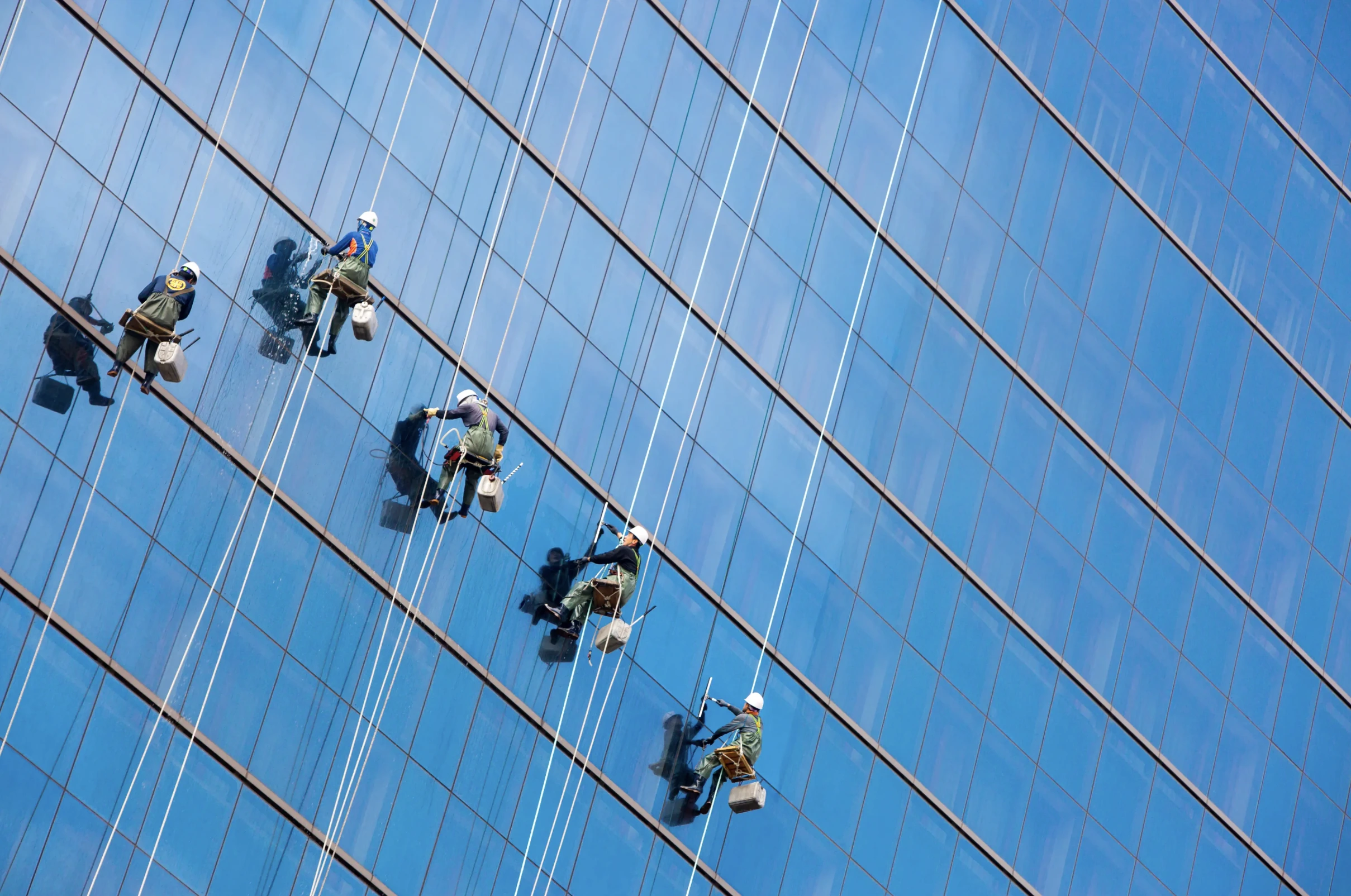
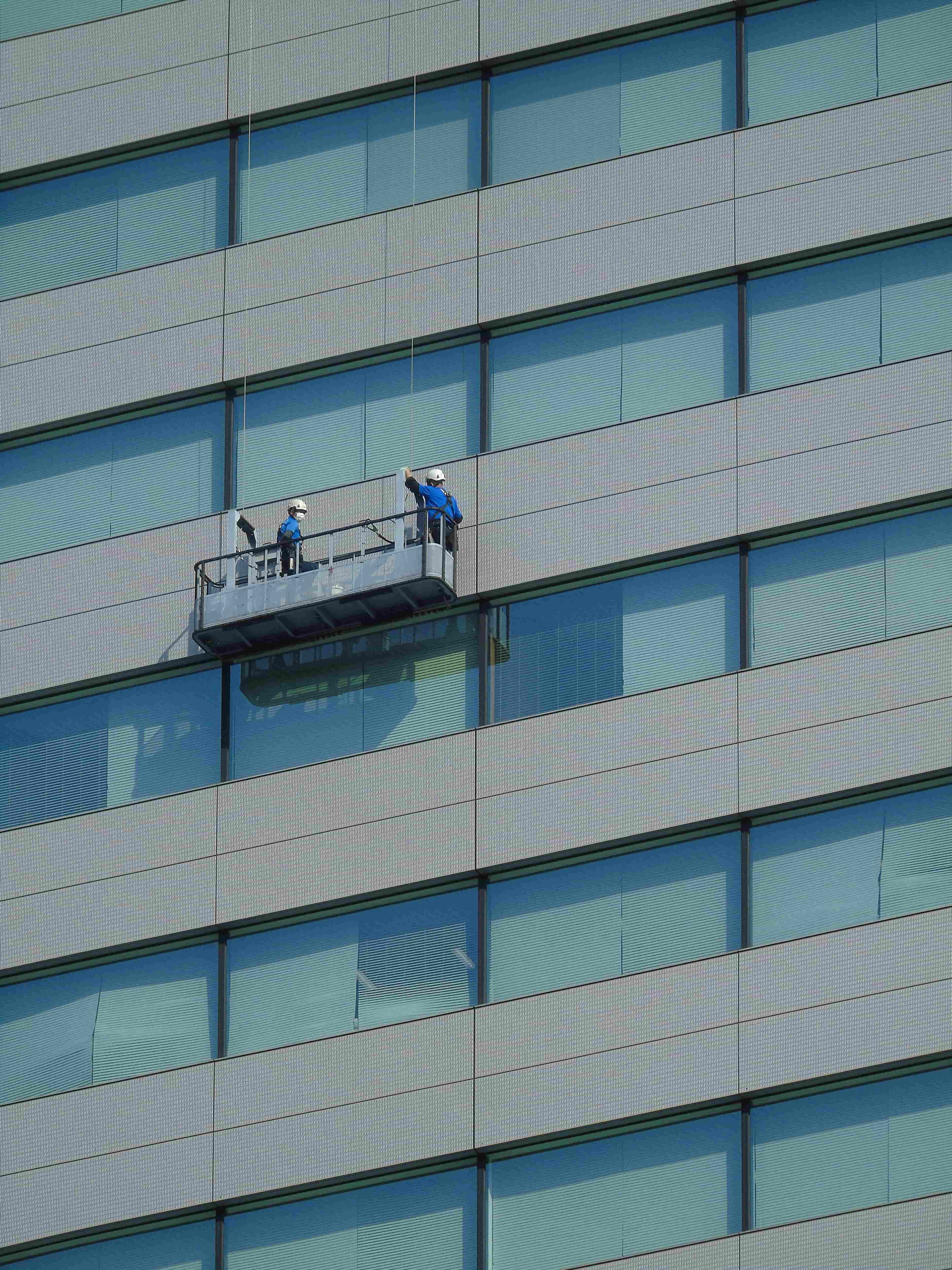
Access requirements, since a high-rise elevation may need MEWP or abseiling access rather than ground-level equipment
This inspection stage is also where planning considerations should be raised. Buildings in conservation areas, or those that are listed, may require prior approval before certain cleaning methods are used, and it is worth confirming this with the relevant borough before work is scheduled rather than after.
How often a commercial facade actually needs attention
There is no single answer that applies to every building, which is part of why a generic maintenance schedule often underperforms one built around the specific building. A straightforward facade in a less exposed location might only need attention every two to three years, while a building on a busy road, or one with a north-facing elevation prone to algae, may need checking annually even if full cleaning is less frequent.
The more useful question is not how often to clean, but how often to inspect. Catching staining or biological growth early keeps the work to a straightforward clean. Leaving it for several years in a high-exposure location is what turns a cleaning job into a restoration job, with the cost difference between the two being considerable. This is usually the point at which facade restoration in London buildings gets commissioned, later and at greater cost than an earlier inspection would have required.
Common mistakes that cost more later
The most frequent and most expensive mistake is applying one cleaning method across a facade that has more than one material, usually because it is faster or simpler to plan that way. The second is skipping a test area assessment to save time, which occasionally results in visible marking that is far more conspicuous, and more expensive to resolve, than the original staining would have been. The third is treating facade cleaning as purely cosmetic and deferring it indefinitely, when in practice a consistent inspection and cleaning programme is what prevents a cleaning budget turning into a repair or restoration budget further down the line.
Getting a facade inspection booked
A facade inspection is a useful first step for any building where the last clean is more than a couple of years ago, or where staining has started to appear on shaded or exposed elevations. Classic London's stone restoration and commercial window cleaning teams work across the full range of facade cleaning services a mixed-material building needs, and can recommend the right approach before committing to a full clean. For a specific building, it is usually quickest to speak with the Classic London team directly about what the facade needs.
Common Questions
Everything you need to know about our services and processes