



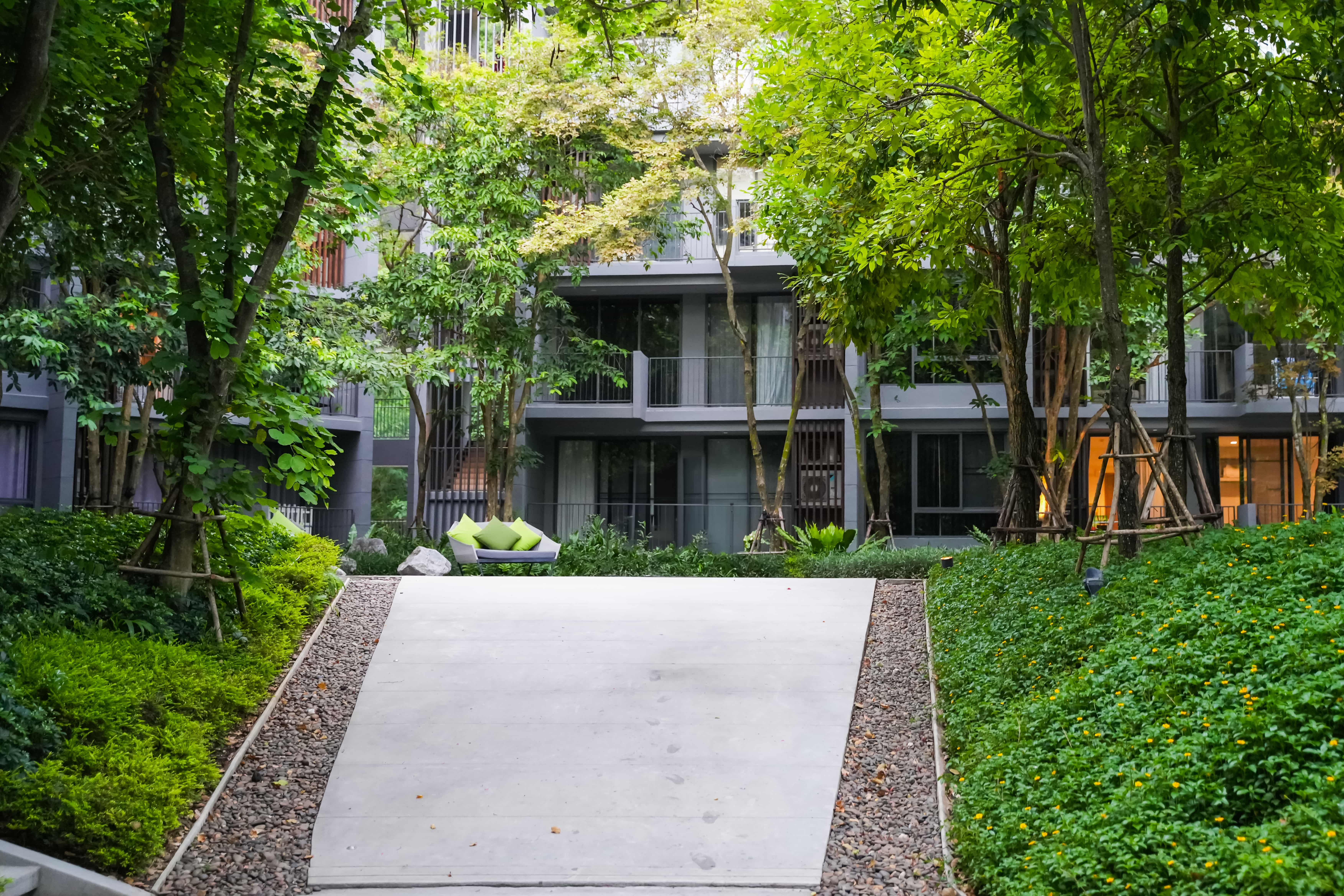
How Exterior Landscaping Shapes First Impressions for Commercial Properties
The exterior of a commercial building communicates management quality before anyone steps through the door. This guide looks at how exterior landscaping shapes first impressions for tenants, clients and visitors, and what property managers can do to make outdoor spaces work harder for the buildings they manage.
The outside of a commercial building communicates something before anyone has spoken to a member of staff, read a sign, or entered the reception. The condition of the entrance path, the state of the planted borders, the appearance of the paved forecourt and the general sense of whether the outdoor spaces are actively managed or simply left to deteriorate: all of these form part of the judgement that tenants, clients, visitors and prospective occupiers make about a building and the organisation responsible for it.
For property managers and facilities teams, this means exterior landscaping is not a purely aesthetic consideration. It is a practical one that affects tenant satisfaction, visitor perception, occupier retention and the longer-term reputation of the building as a well-managed asset.
The First Impression Problem
Research into how people judge environments consistently shows that initial impressions form quickly and are difficult to revise. For commercial buildings, the exterior is where that impression begins. A building with clean, well-maintained outdoor spaces signals that the management is attentive, that standards are maintained consistently, and that the people responsible for the building take it seriously.
The reverse is equally true, overgrown planting, cracked or stained paving, unkempt grass edges, and poorly maintained entrance areas all suggest neglect, regardless of how well the interior is managed. For a prospective tenant viewing a building, or a client visiting a business for the first time, these signals carry real weight.
In a competitive London commercial property market, where tenants have genuine choice about where they locate and how long they stay, the condition of a building's exterior is a factor in decisions that have significant financial consequences for landlords and managing agents.
What Exterior Landscaping Actually Covers
Exterior landscaping for commercial properties is broader than planting alone. It encompasses all of the elements that shape how the outside of a building looks and functions, from the structural hard landscaping that provides the foundation to the soft landscaping that brings character and seasonal interest.
| Hard Landscaping | Soft Landscaping |
What it covers | Paved surfaces, paths, steps, boundary walls, street furniture, drainage | Trees, shrubs, hedging, seasonal bedding, grass, planted borders |
Primary function | Structure, access, safety, drainage | Character, colour, seasonal interest, visual softening |
Maintenance frequency | Low to moderate; cleaning, repairs | Regular and cyclical; cutting, planting, replacing |
Winter appearance | Unchanged | Dependent on species selection and scheme planning |
Impression when neglected | Cracked paving, stained surfaces, damaged structures | Overgrown shrubs, bare soil, neglected grass edges |
Both elements need to work together as a coherent scheme. Well-maintained hard landscaping looks deliberate and professional. Well-specified soft landscaping signals active management and investment. Without both, the overall impression is incomplete. Our guide to hard and soft landscaping for commercial properties covers how to balance the two effectively for commercial sites.
Where First Impressions Are Actually Formed
Not all of a building's exterior carries equal weight in terms of impression. For most commercial properties, there are two or three areas where the quality of the landscaping has a disproportionate impact on how the building is perceived.
The entrance and approach: The path or route from the street, car park or reception drop-off point to the building entrance is where visitors spend the most time looking at the exterior. Planted borders framing this route, well-maintained paving underfoot, and clear unobstructed sightlines to the entrance all contribute to a sense of arrival that feels intentional and well managed.
The building frontage: The elevation facing the street or primary approach is what most people see first. The condition of paving, the maintenance of any planting near the building, the presence of seasonal colour, and the general tidiness of this zone form the initial impression that everything else either reinforces or contradicts.
Car park and hardstanding areas: Often overlooked in landscaping planning, car parks are where many visitors spend several minutes before and after entering the building. Stained or degraded surfaces, poor drainage, damaged kerbs and absent or struggling planting in car park beds all affect the impression the building makes, particularly for first-time visitors.
Concentrating maintenance effort and landscaping investment on these three zones, even where resources are limited, delivers the greatest return in terms of how the building is perceived.
The Maintenance Question
A landscaping scheme that looks impressive at installation but deteriorates within a year creates a worse impression than a more modest scheme maintained consistently. This is one of the most common and most avoidable problems in commercial exterior landscaping.
The right approach is to specify the planting scheme around the maintenance programme that can realistically be delivered. For sites where grounds maintenance visits are limited, the following principles apply:
Choose robust evergreen structure planting over high-maintenance seasonal schemes
Specify low-maintenance hedging varieties that hold their shape between cuts
Invest in quality hard landscaping surfaces that resist staining and weathering
Include winter-interest species so the scheme holds its appearance year-round
Use mulching to suppress weeds and reduce the frequency of intervention needed between visits
For sites where a more ambitious programme is appropriate, landscaping services should be specified with a clear maintenance schedule covering the full year. Low-maintenance commercial landscaping ideas are worth considering for London sites where access and scheduling add complexity to the maintenance picture.
Exterior Landscaping as Part of Building Management
The most effective approach to commercial exterior landscaping treats it as a component of building management rather than a separate aesthetic consideration. The outdoor spaces around a building affect tenant satisfaction, visitor experience, safety, accessibility and the long-term condition of the hard surfaces and planting stock. Managing them well reduces reactive costs, supports tenant retention and protects the building's reputation as a well-run asset.
For property managers overseeing multiple London sites, consistency of standard across a portfolio matters as much as quality at individual locations. A grounds maintenance programme that delivers a predictable, reliable standard across all sites is considerably more valuable than a patchwork of contractors producing variable results.
Classic London provides commercial landscaping across London and the South East, covering exterior landscaping design, hard and soft landscaping installation, and ongoing grounds maintenance for managed commercial properties and portfolios. To discuss the outdoor spaces at your building or portfolio, speak with the Classic London team.
Frequently Asked Questions
How does exterior landscaping affect tenant satisfaction?
→ The condition of a building's outdoor spaces directly influences how tenants perceive the quality of building management. Well-maintained exterior landscaping signals that standards are consistently upheld, which supports tenant confidence and reduces the likelihood of complaints about building presentation. For tenants whose clients visit the building, the exterior also reflects on their own professional image.
What exterior landscaping elements have the most impact on first impressions?
→ The entrance approach, building frontage and car park areas carry the most weight because these are the spaces visitors spend the most time in before entering the building. Concentrating maintenance effort on these zones delivers the greatest return on a limited grounds maintenance budget.
How often should commercial exterior landscaping be maintained?
→ Frequency depends on the scheme and the standard the building needs to maintain. During the growing season, grass cutting and hedge trimming may be required every two to four weeks. Seasonal planting changes typically happen two to four times per year. A well-specified maintenance programme should cover the full year including winter, when structure planting and evergreen elements become particularly important.
Can exterior landscaping improve a commercial property's value?
→ Well-maintained outdoor spaces contribute to the overall perception of a building's management quality and condition, which affects both its attractiveness to prospective tenants and its long-term asset value. For commercial properties in competitive London locations, the exterior presentation of a building is a genuine factor in occupier decisions.