


Hard Landscaping vs Soft Landscaping: The Definitive Guide for Commercial Properties
Hard landscaping and soft landscaping serve different purposes, carry different costs and demand different levels of ongoing commitment. This guide explains what each one involves, how they compare across the considerations that matter to commercial property managers, and how to plan a scheme that works for the site and the maintenance budget available.
When a commercial property looks well managed from the outside, it is usually because someone made deliberate decisions about what to install, how to maintain it, and how the different elements work together. Two terms sit at the centre of that planning process: hard landscaping and soft landscaping. Understanding what each one involves, and how they complement each other, is practical knowledge for any property manager, facilities team or managing agent responsible for the outdoor spaces around a building.
What Hard Landscaping Is
Hard landscaping covers the built, structural elements of an outdoor space. These are the permanent or semi-permanent features made from materials such as stone, concrete, brick, tarmac, steel and timber. They define how a space functions: where people walk, how vehicles move, where water drains, and where the boundaries of the site sit.
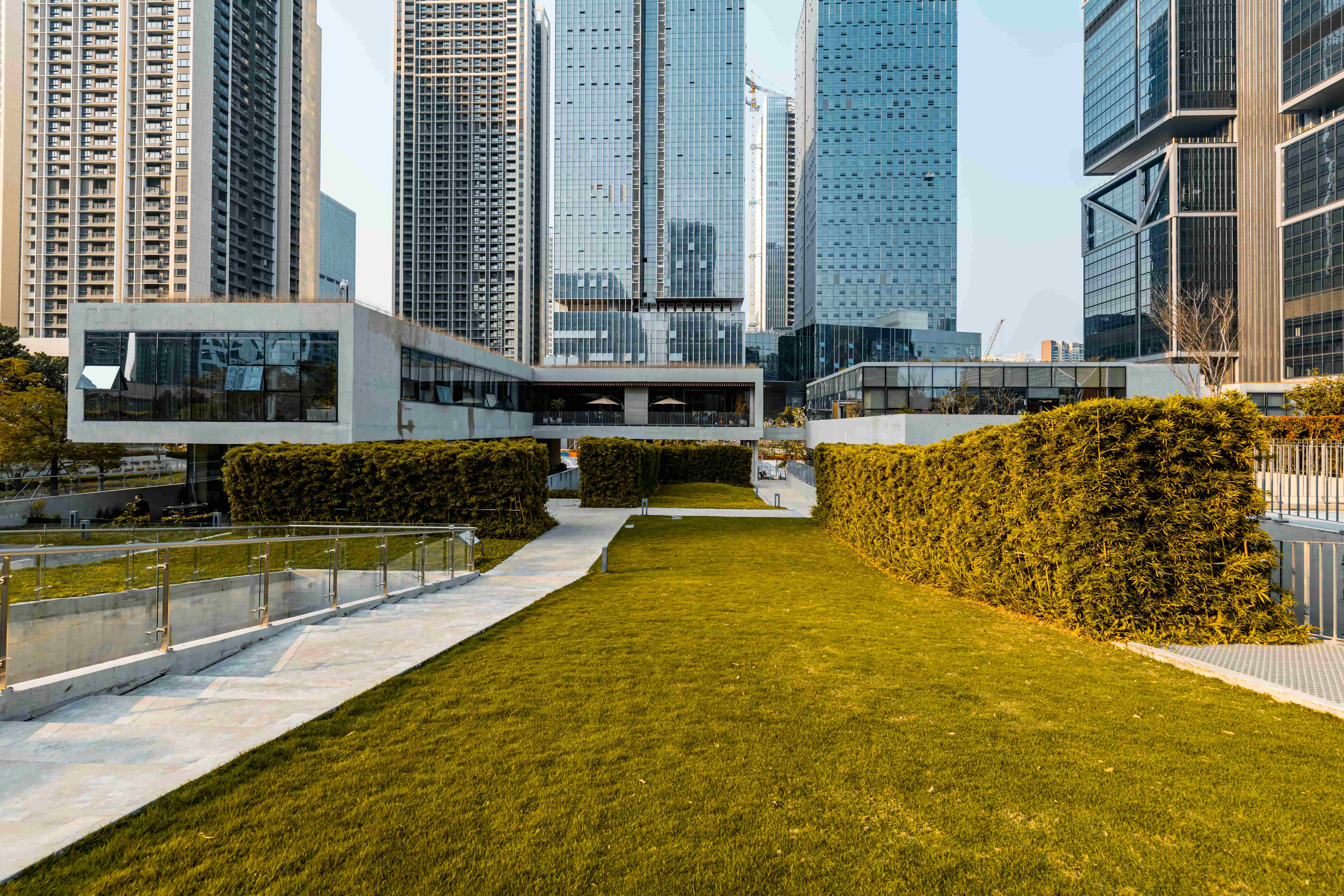
Common hard landscaping features in commercial settings include paved paths and pedestrian routes, car parks and hardstanding areas, retaining walls and boundary structures, external steps and ramps, drainage channels and permeable surfaces, and street furniture such as seating, cycle stands, bollards and lighting columns.
The main practical advantage of hard landscaping is durability. A well-installed stone path or drainage system should perform reliably for many years with relatively little ongoing maintenance. For property managers, this makes quality hard landscaping a long-term investment rather than a recurring cost. The upfront expenditure is higher, but the ongoing burden is low compared to living elements that require regular attention.
You can read more about what hard landscaping services typically involve for commercial sites.
What Soft Landscaping Is
Soft landscaping covers the living elements of an outdoor space. Grass, trees, shrubs, hedging, seasonal planting, climbing plants and any other organic material that grows and changes over time all fall into this category. Where hard landscaping provides structure, soft landscaping provides character, seasonal interest and a visible signal that the property is actively cared for.
In commercial environments, soft landscaping typically includes maintained lawns and grass areas, shrub and hedge planting used for screening or boundary definition, specimen trees that provide scale and shade, seasonal bedding near entrances and client-facing areas, and planted borders that soften the transition between building and outdoor space.
The key difference in practical terms is that soft landscaping requires ongoing attention. Grass grows, hedges spread, seasonal planting needs replacing and trees need periodic inspection and management. This is not a weakness of soft landscaping services so much as the nature of working with living material. The maintenance commitment needs to be planned for from the outset, not treated as an afterthought once the planting is in.
How They Compare
| Hard Landscaping | Soft Landscaping |
Materials | Stone, concrete, tarmac, timber, steel | Plants, grass, trees, shrubs, soil |
Upfront cost | Higher | Lower |
Ongoing maintenance | Low to moderate | Regular and cyclical |
Winter appearance | Unchanged | Reduced colour; some plants dormant |
Environmental benefit | Drainage, structure | Air quality, biodiversity, temperature |
Reversibility | Difficult and costly to change | Easier to adapt or restyle |
Why Commercial Properties Need Both
The decision between hard and soft landscaping is rarely either-or. A site that is entirely paved feels harsh and institutional and a site with extensive planting but poor hard surfaces is impractical, potentially inaccessible, and harder to maintain to a consistent standard. The most effective commercial landscaping schemes use both categories deliberately, with each doing what the other cannot.
Hard landscaping creates the foundation. It ensures safe pedestrian routes regardless of weather, manages vehicle and service access, handles drainage, and provides the structural elements that define the space year-round. Soft landscaping brings the character. Planted borders at an entrance, maintained trees along a boundary, and seasonal colour near reception communicate care and investment in a way that paved surfaces alone cannot.
The right balance depends on the type of property, how it is used day to day, the maintenance budget available, and the impression the site is intended to create. For sites where maintenance visits are limited, a scheme weighted more heavily toward robust hard landscaping with low-maintenance planting will perform more reliably over time than an ambitious soft landscaping programme that cannot be kept up. Our guide to low-maintenance commercial landscaping ideas covers this in more detail for London sites specifically.
The Maintenance Reality
Hard landscaping maintenance is primarily about keeping surfaces safe, clean and in good repair. This means pressure washing paved areas to remove algae and soiling, repairing cracked or lifted paving before it becomes a trip hazard, clearing drainage channels, and maintaining external furniture and fixtures. Managed well, this is straightforward and infrequent.
Soft landscaping maintenance is more continuous. Grass cutting, hedge trimming, seasonal planting changes, weed control and tree management all require regular scheduled visits. The frequency depends on the scheme and the standard the property needs to maintain, but commercial grounds maintenance in London typically involves visits every two to four weeks during the growing season, with reduced frequency through winter.
Properties that manage maintenance reactively, responding only when problems become visible, consistently spend more over time than those with planned, regular programmes. A blocked drain, an overgrown hedge encroaching on a path, or a cracked paving slab that has been left unattended all become more expensive to resolve the longer they are left.
Frequently Asked Questions
What is the difference between hard and soft landscaping?
→ Hard landscaping covers the built, structural elements of an outdoor space, including paving, paths, walls, drainage and external furniture. Soft landscaping covers the living elements, including grass, planting, trees and hedging. Most commercial properties benefit from a planned combination of both.
Which costs more to install?
→ Hard landscaping typically has higher upfront installation costs due to materials and groundwork. Soft landscaping costs less to install but carries ongoing maintenance costs that accumulate over time. A well-planned scheme considers both together rather than treating installation and maintenance as separate budgets.
Can hard landscaping changes require planning permission?
→ Minor works such as resurfacing an existing car park generally do not. Significant changes to levels, new structures, or works affecting drainage or neighbouring properties may require consent. It is worth checking with the local planning authority before committing to major hard landscaping works.
How do I reduce the maintenance burden of soft landscaping?
→ Choosing robust, low-maintenance species appropriate for the site conditions makes the biggest difference. Mulching to suppress weeds, specifying evergreen structure planting, and avoiding high-maintenance seasonal schemes where maintenance visits are limited all reduce the ongoing commitment without compromising the overall appearance.
Getting the Balance Right
Hard and soft landscaping work best when they are planned together from the start, with each element specified to suit the site, the usage and the maintenance programme that can realistically be delivered.
For commercial property managers and facilities teams, that planning is what separates outdoor spaces that consistently look well managed from those that deteriorate between reactive interventions.
Classic London provides commercial landscaping services across London and the South East, covering both hard and soft landscaping for managed properties, commercial estates and mixed-use developments. To discuss a landscaping review or grounds maintenance programme for your site, speak with the Classic London team.