



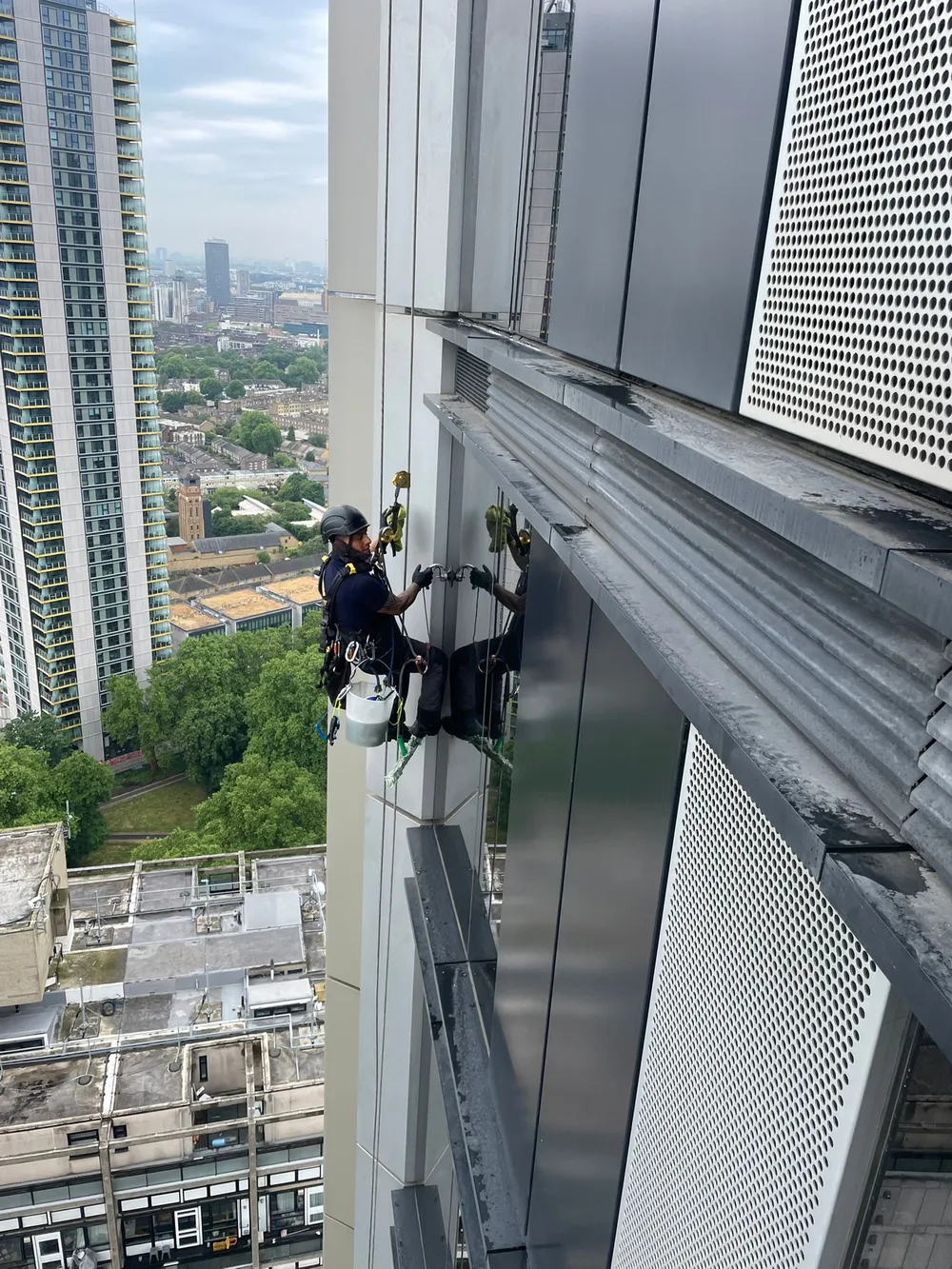
High-Rise Window Cleaning in London: Safety Standards & What to Ask
Learn the key safety standards, UK regulations and must-ask questions when hiring high-rise window cleaners in London, so your building stays compliant and protected.
High-rise window cleaning in London is not just another line on a maintenance schedule. It is a high-risk, highly regulated activity where safety, compliance and public protection come first – and where clients need to know the right questions to ask before anyone leaves the ground.
High-Rise Window Cleaning in London: Safety Standards, Regulations, and What Clients Should Ask
For owners and managers of tall commercial buildings in London, clear glass and sharp kerb appeal are essential. But the way your windows are cleaned – the methods, training and safety culture behind the work – is just as important as the final shine. Understanding the basics of safety standards and regulations helps you choose the right contractor and protect your building, tenants and reputation.
High-rise window cleaning brings added risks compared with standard low-level work. Operatives are working at height, often above busy pavements, roads and public spaces, in weather conditions that can change quickly. Many London façades include set-backs, balconies, irregular shapes and large expanses of glass, which make access more complex. These factors mean you cannot treat window cleaning as a simple commodity; you need a partner with the right systems and expertise.
Typical access methods for high-rise window cleaning include rope access (abseiling), mobile elevated work platforms, permanent building maintenance units and cradles, and internal reach-and-wash or pole systems for certain areas. Each method has its place, and a professional company will choose the safest reasonably practicable option based on your building’s design and surroundings.
Key Safety Standards and Regulations
In the UK, high-rise window cleaning sits within a wider framework of health and safety law designed to protect workers and the public. You don’t need to memorise every regulation, but you should recognise the key principles and expect your contractor to work within them.
Core regulations that affect high-rise window cleaning include:
Health and Safety at Work etc. Act 1974 – general duty to protect workers and others.
Work at Height Regulations – plan, supervise and use the safest practicable methods.
Provision and Use of Work Equipment Regulations – ensure equipment is suitable and maintained.
Lifting Operations and Lifting Equipment Regulations – inspection and certification of lifting gear, cradles and anchor points.
COSHH – safe storage and use of cleaning chemicals.
For a building manager, the practical takeaway is simple: any high-rise window cleaning contractor should be able to explain how they comply with these requirements in plain language and provide risk assessments, method statements and equipment inspection records when asked.
Safe Access Methods for London High-Rise Buildings
Different London buildings call for different access methods, and a good provider will explain why a specific approach is safest for your site.
Rope access (or abseiling) is widely used on tall, complex façades where other options are not practical. Properly managed, it is a safe and efficient technique, but it relies on highly trained operatives, certified anchor points and robust rescue plans. Mobile elevated work platforms can be ideal where there is sufficient ground space and access, allowing teams to work from a stable, guarded platform. However, they require trained operators and careful traffic and pedestrian management, particularly on busy London streets.
Many taller towers are equipped with permanent building maintenance units and cradle systems built into the roof or façade. These systems must be inspected, tested and certified regularly, and operated only by competent personnel. For lower-level or specific areas, internal access using telescopic poles or reach-and-wash systems may be possible, reducing the need to work externally at height.
The right method for your building will depend on factors such as height, shape, set-backs, surrounding streets, nearby structures and any existing façade access equipment. You should expect your contractor to visit the site, review drawings and discuss options before proposing a solution.
What Good Safety Practice Looks Like on Site
Even if you are not a technical expert, there are clear signs that a high-rise window cleaning operation is being run safely and professionally.
Signs of good practice you should see:
Cordoned-off ground areas with barriers and clear signage.
Operatives wearing appropriate PPE (harnesses, helmets, hi-vis, gloves, eye protection).
Visible pre-start checks on ropes, harnesses, anchor points and equipment.
Sensible control of entrances and walkways directly below work areas.
Tidy storage and handling of tools and chemicals with nothing left loose near edges.
If you visit the roof or plant area, you should expect clearly marked anchor points, organised work areas and a team that can explain what they are doing and why. A professional contractor will welcome sensible questions about safety rather than brushing them aside.
Certifications and Training to Look For
Because high-rise window cleaning is safety-critical, training and competence are non-negotiable. As a client, you are entitled to ask for evidence that the team is qualified and current.
Operatives working at height should have up-to-date training in working safely at height and, where applicable, in rope access techniques. Where rope access is used, you should look for recognised qualifications and assurance that there is enough competence on site to manage an emergency. If mobile elevated work platforms are part of the plan, operators should hold appropriate certifications for the specific types of equipment used.
Beyond individual qualifications, a good contractor will have structured in-house training, regular refreshers and a culture of continuous improvement. They should also carry out regular health and safety audits and toolbox talks, particularly on complex or high-risk sites. Documentation and procedures should support the certificates, not the other way around.
Questions Every London Client Should Ask
Before you appoint or renew a high-rise window cleaning contractor in London, it is worth asking a set of straightforward questions.
Key questions to use as a checklist:
Which access methods do you recommend for our building, and why are they the safest choice?
How do you plan and manage work at height in line with UK regulations?
What training and certifications do your operatives hold for rope access, cradles or elevated platforms?
How often are your equipment, anchor points and building maintenance units inspected and certified?
Can you share risk assessments and method statements specific to our building before work starts?
How will you protect the public and our tenants at street and entrance level during cleaning?
What insurance cover do you hold, and can you provide references from similar London buildings?
If a contractor cannot answer these clearly or is reluctant to share documentation, that is a strong warning sign.
Balancing Safety, Appearance and Cost
High-rise window cleaning is an investment in safety, compliance and kerb appeal. Clean, well-maintained glazing improves natural light, supports tenant satisfaction and enhances the visual impact of your building, but it must be achieved safely.
In London, many commercial façades benefit from cleaning every four to eight weeks, depending on location, pollution levels and exposure. You can often combine window cleaning with periodic façade inspections to identify issues like failed seals, cracks or fixings early. While it can be tempting to focus on price alone, the cheapest option may not include the level of planning, training and equipment needed to manage risk properly.
A contractor who understands your building and its access systems, keeps detailed records and works with you over the long term will usually deliver better value than one-off providers who focus only on getting the job done as quickly as possible.
Choosing a Trusted High-Rise Window Cleaning Partner in London
Ultimately, you need a partner who treats safety and compliance as the starting point, not an afterthought. The right high-rise window cleaning contractor will be transparent about their methods, confident in their training and paperwork, and proactive in helping you meet your duties as a building owner or manager.
To make it easier to compare potential partners, you can use a simple checklist like this:
Area to check | What “good” looks like |
Safety planning | Clear RAMS, building-specific plans, visible site controls |
Training & competence | Current height, rope/MEWP training and documented refreshers |
Equipment & inspections | Up-to-date certificates for cradles, MEWPs, anchor points |
Insurance & track record | Adequate cover and references for similar London buildings |
Communication & reporting | Pre-visit briefings, incident reporting, photo or visit reports |
By asking the right questions, insisting on visible good practice and valuing safety alongside appearance and cost, you can keep your London building looking its best while protecting your tenants, the public and your long-term reputation.